Todd, here's a pass at your idea. Instead of saving every ask for the last few minutes, the room takes real steps all the way through, starting on slide 3. The named savings slide stays exactly as it is. These are mockups only, and nothing in the live deck has changed.

This sets the expectation early. The room hears that today isn't a lecture, sees the three things they'll do, and watches the counts go up as people do them.
"We're rebels. We don't sit idly by, we take control of our financial future. So today I'm going to ask you to do a few things with me, not just listen. Look at these three. By the time we're done, I want every one of these numbers to match the number of people in this room."
It's a promise you get to keep. Each tile ticks up live as people write their why on slide 5, pick accounts on the named savings slide like they already do, and tap on the new Acorns slide. At the end the same three numbers come back as the closing slide, so the presentation starts and ends on the same scoreboard.
Two People is the moment the room feels it, and that's when the investing step is easiest to take. This short slide gives them a way to act on that, then you hand out the Acorns postcard like you already do.
Set up Acorns, turn on a recurring investment, and Acorns adds $40 after your first one.
Start on AcornsNot right now? We'll email you the link.
We get paid by Acorns if you open an account, so we have an incentive to recommend it. Investing involves risk.
"If you want to be Maria and not Nick, the easiest version of that is five dollars. I'm not going to tell you to do it. It's on your phone if you want it."
The slide teaches and the phone offers. There's no "sign up now" on the big screen, just a count of people who chose to. It's also the first time we ask for an email, at the moment they want something from us.
Right now the last few minutes are three asks in a row: subscribe, put in your email, take the survey. This puts one slide up that shows the room what it accomplished, with the three survey taps on their phones.
The room scans one code at the start and never needs another. The small code in the corner is only for people who walked in late.
The last thing on screen is the room's own numbers, the same three tiles from slide 3, all filled in. It's a celebration instead of a sign-up form.
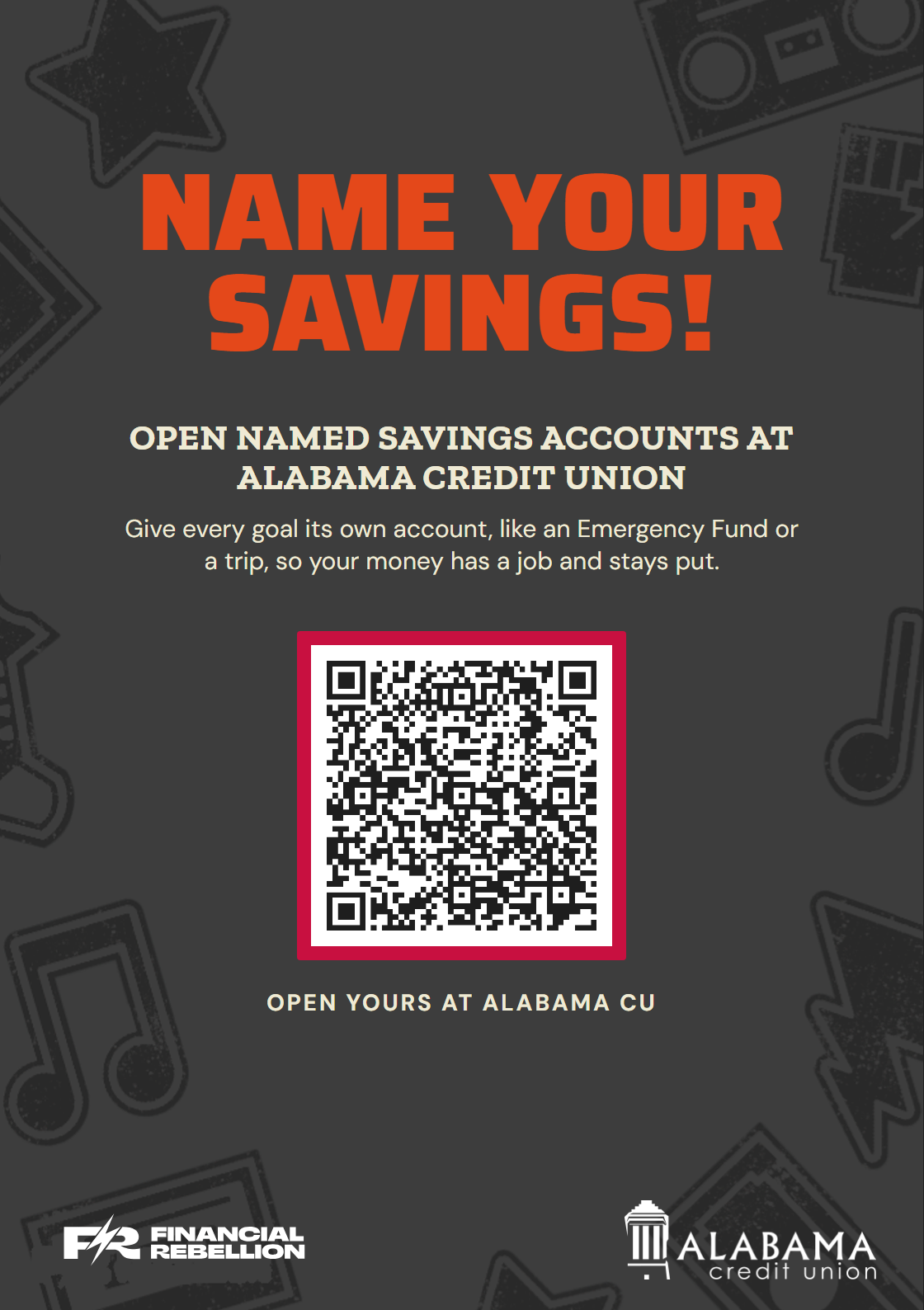
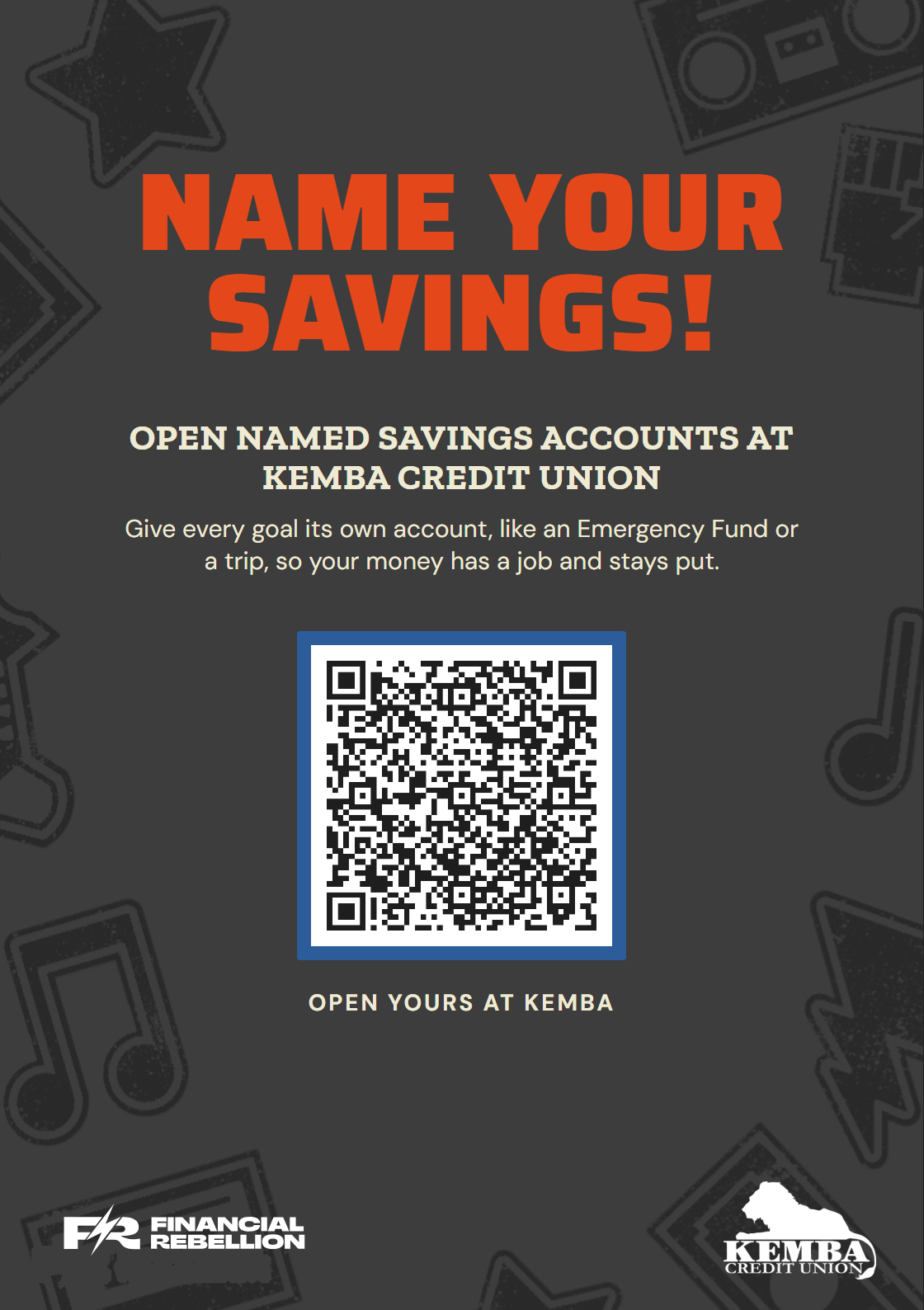
Same look as the Join the Rebellion flyer, but the front is about the credit union instead of signing up for FR. It teaches the named savings idea in one sentence, and the QR code goes straight to that credit union's savings page.


Phones get put away, but a flyer goes home in a pocket. It's also the one thing a credit union can see in the room with their name on it.
Ask each credit union for a promo code just for us, like REBEL25. Every account opened with it is a member we can prove came from your presentation, which is the number that gets them to renew.
| Today | With these changes | |
|---|---|---|
| QR codes | One to follow along, then three at the end | One to follow along, plus a small one for latecomers |
| When we ask for an email | The last few minutes, when people are packing up | On the Acorns slide, when they want the link |
| Acorns | A postcard and a button at the end | A short moment right after Two People, plus the postcard |
| The last slide | A survey | What the room did, with the survey on their phones |